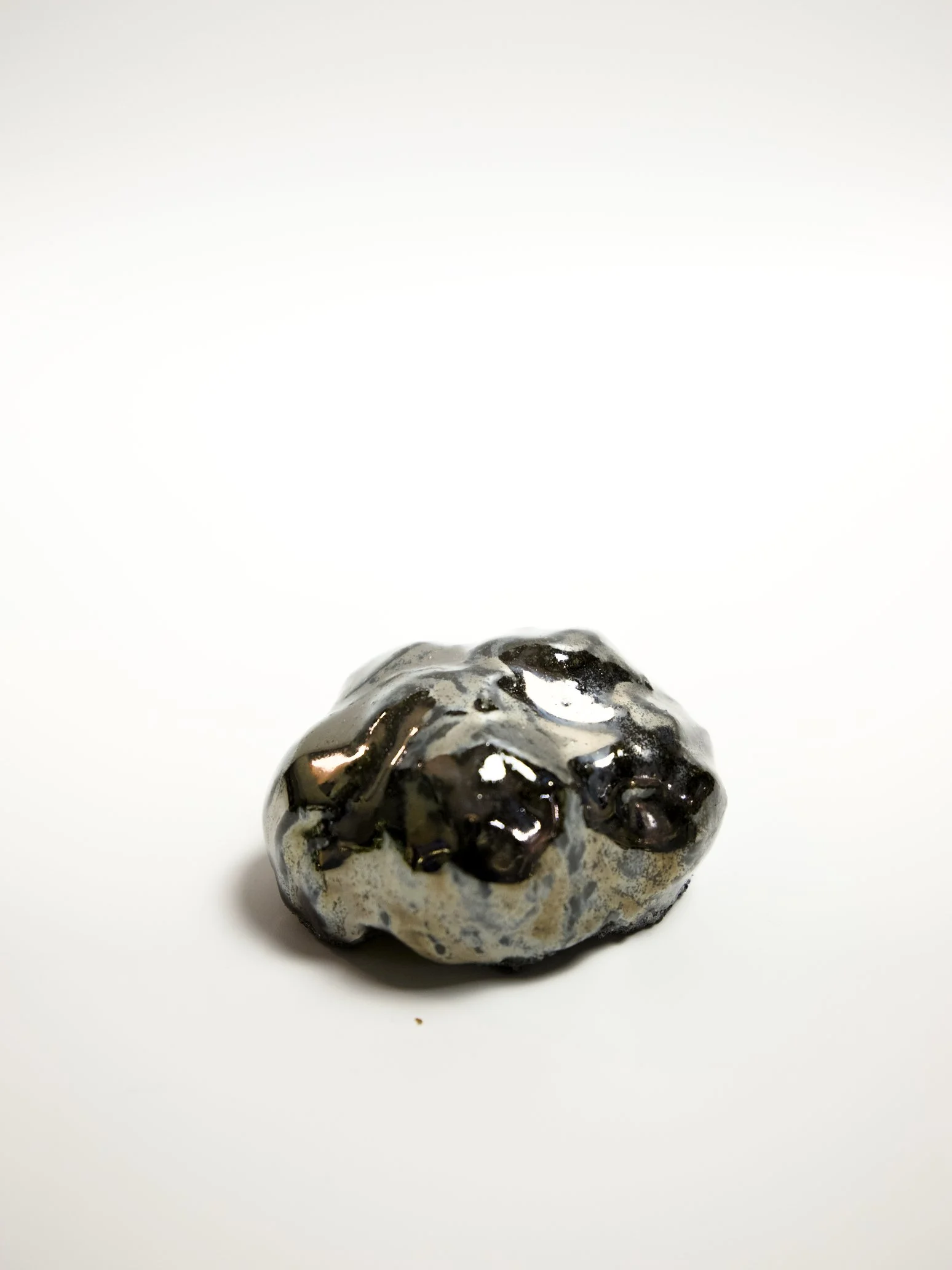
Specimen 01 – Pressure Cell
Artifact Log — Day 037
A compressed mass exhibiting reflective properties.
No visible breach detected.
Pressure appears self-sustaining.
The object does not indicate purpose.
Its contents remain sealed, intact, and undefined.
Dimensions: W 8.5 cm × D 7 cm × H 6 cm
Materials: Stoneware, mirror glaze
SOLD OUT
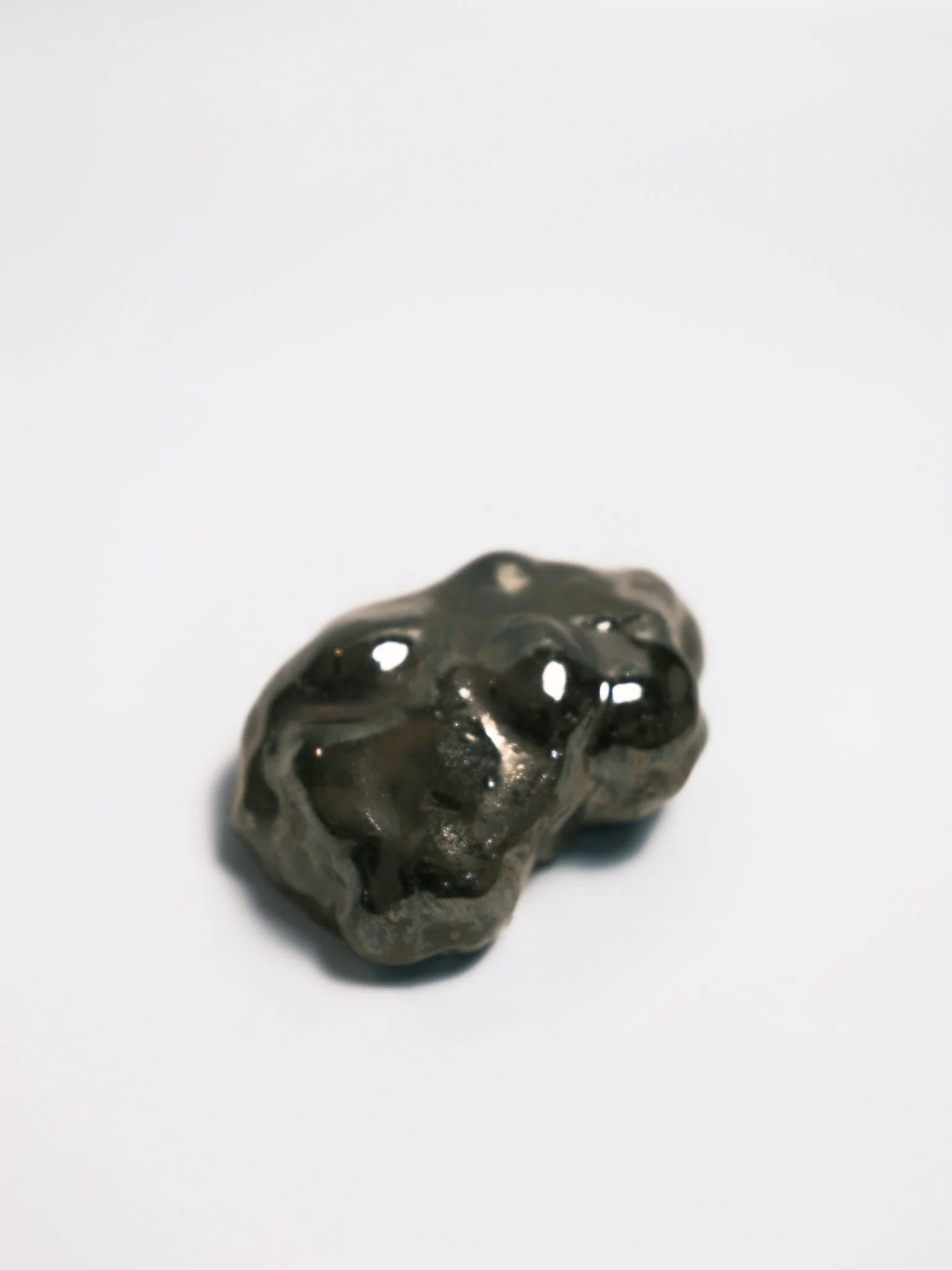
Specimen 02 – Pressure Cell
Artifact Log — Day 038
A compressed mass exhibiting reflective properties.
No visible breach detected.
Pressure appears self-sustaining.
The object does not indicate purpose.
Its contents remain sealed, intact, and undefined.
Dimensions: W 12 cm × D 7.5 cm × H 5 cm
Materials: Stoneware, mirror glaze
CAD 40
Purchase →
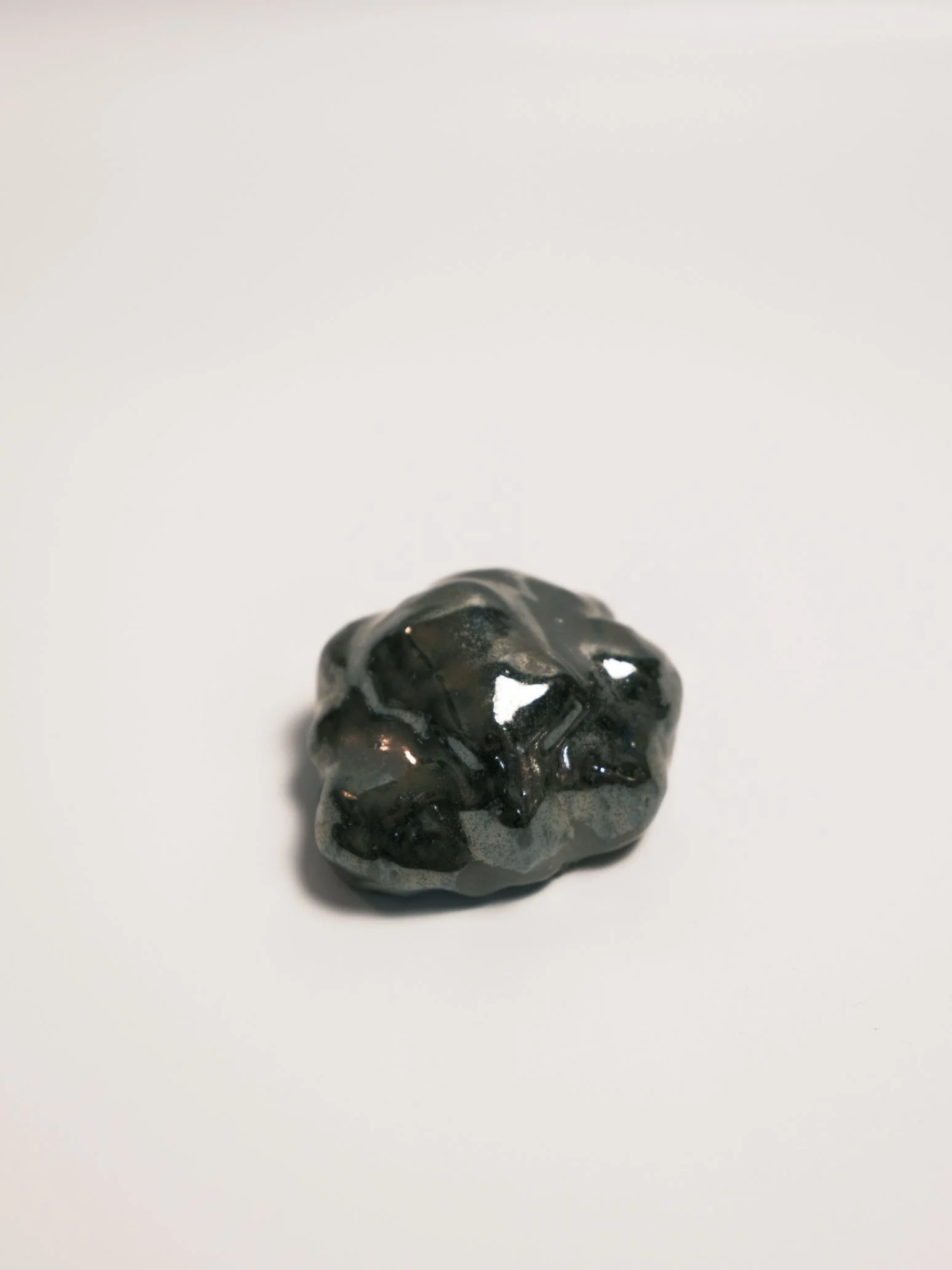
Specimen 03 – Pressure Cell
Artifact Log — Day 039
A compressed mass exhibiting reflective properties.
No visible breach detected.
Pressure appears self-sustaining.
The object does not indicate purpose.
Its contents remain sealed, intact, and undefined.
Dimensions: W 9.5 cm × D 8 cm × H 5.5 cm
Materials: Stoneware, mirror glaze
SOLD OUT
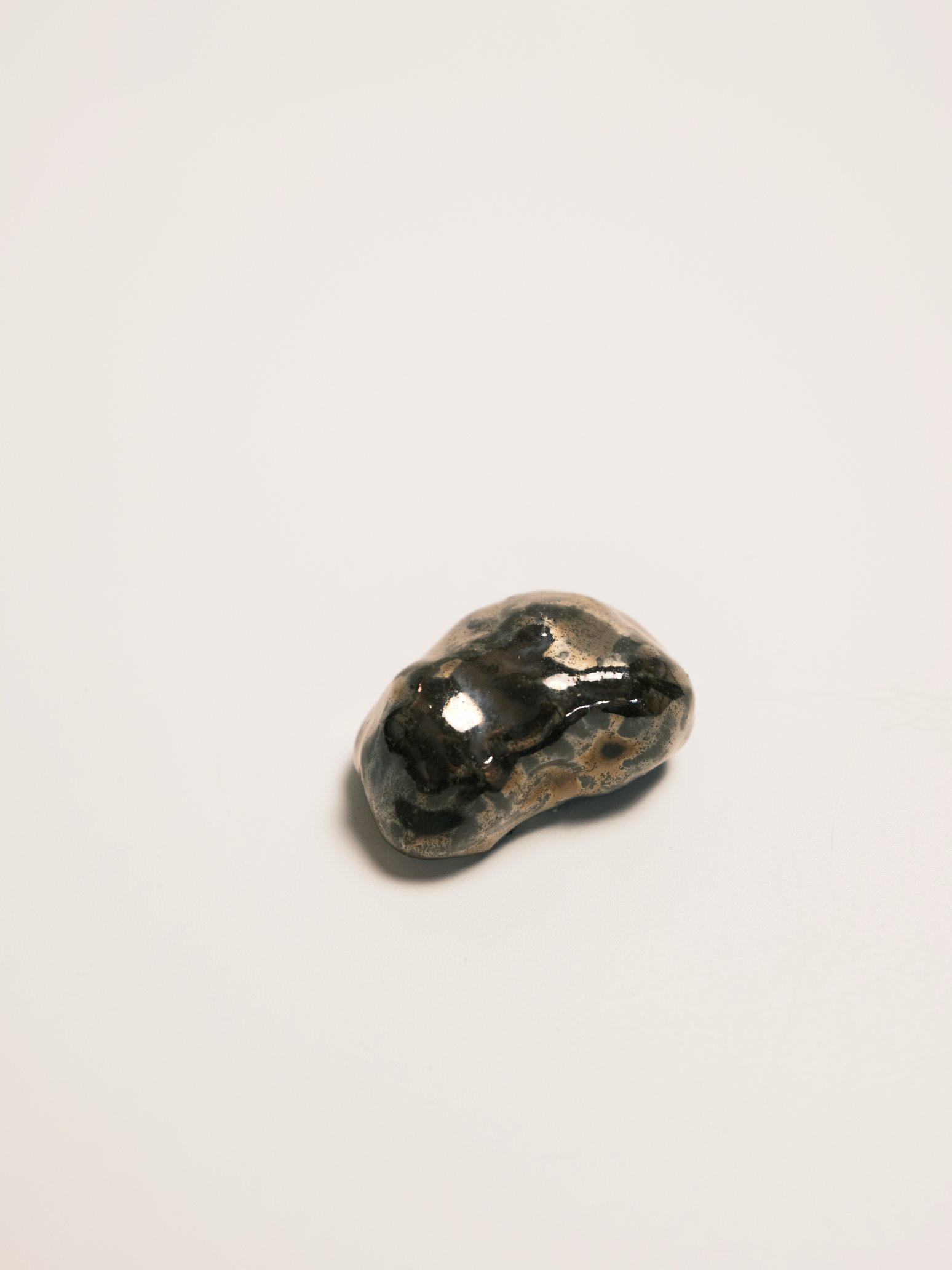
Specimen 04 – Pressure Cell
Artifact Log — Day 040
A compressed mass exhibiting reflective properties.
No visible breach detected.
Pressure appears self-sustaining.
The object does not indicate purpose.
Its contents remain sealed, intact, and undefined.
Dimensions: W 3.2 cm × D 4 cm × H 5.8 cm
Materials: Stoneware, mirror glaze
CAD 30
Purchase →
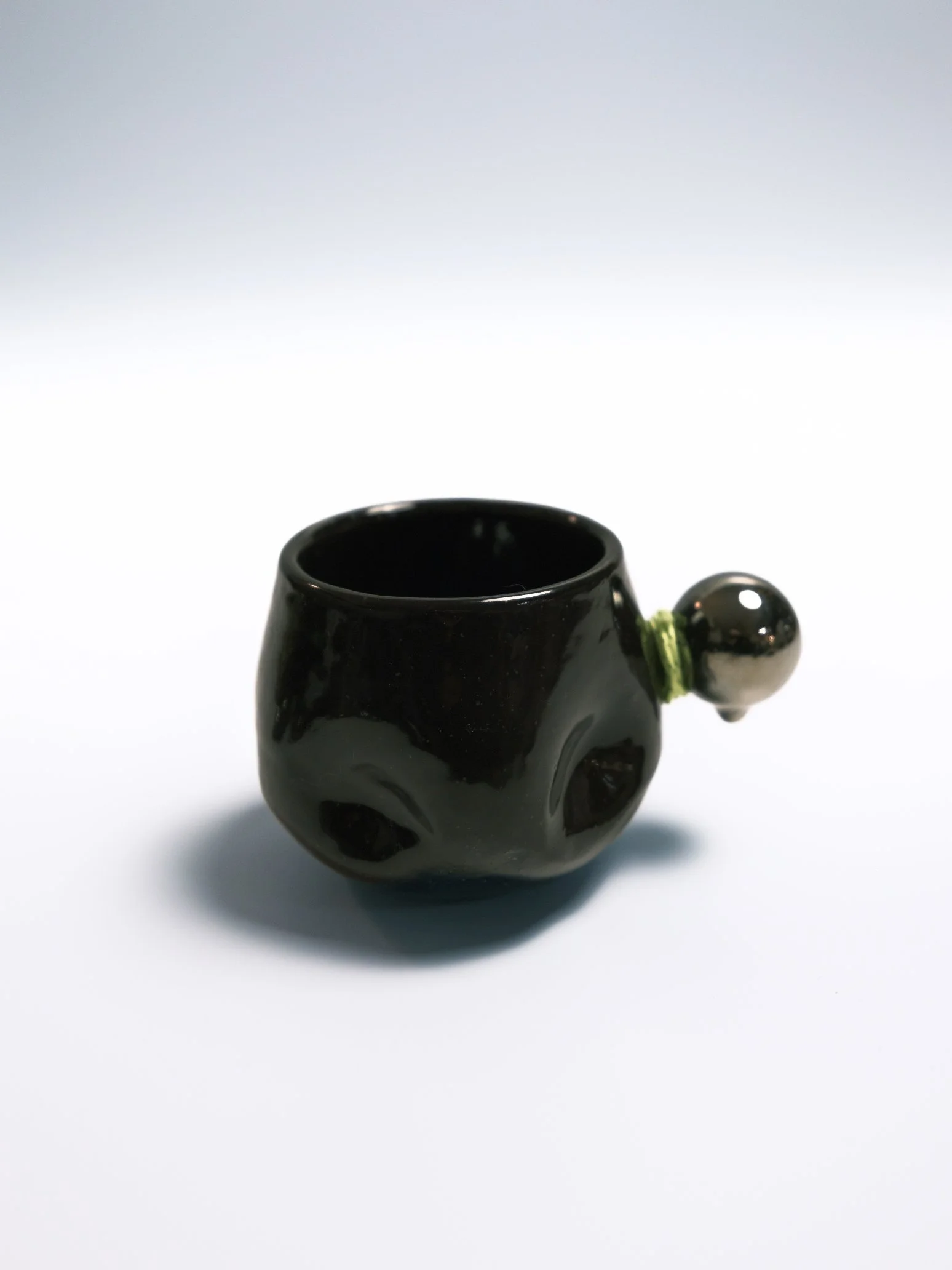
Specimen 05 – Intake Vessel
Artifact Log — Day 041
A vessel-like structure configured for intake, without defined output.
The form suggests containment under sustained pressure.
Reflective glazing interrupts visibility and orientation, while the neon element introduces a non-ceramic intervention — functioning as conduit, tether, or signal.
As an artifact, the object documents a system that absorbs without release.
Its purpose remains undefined.
Dimensions: W 10 cm × D 10 cm × H 7.5 cm
Materials: Stoneware, glossy black glaze, mirror glaze, neon rope
CAD 120
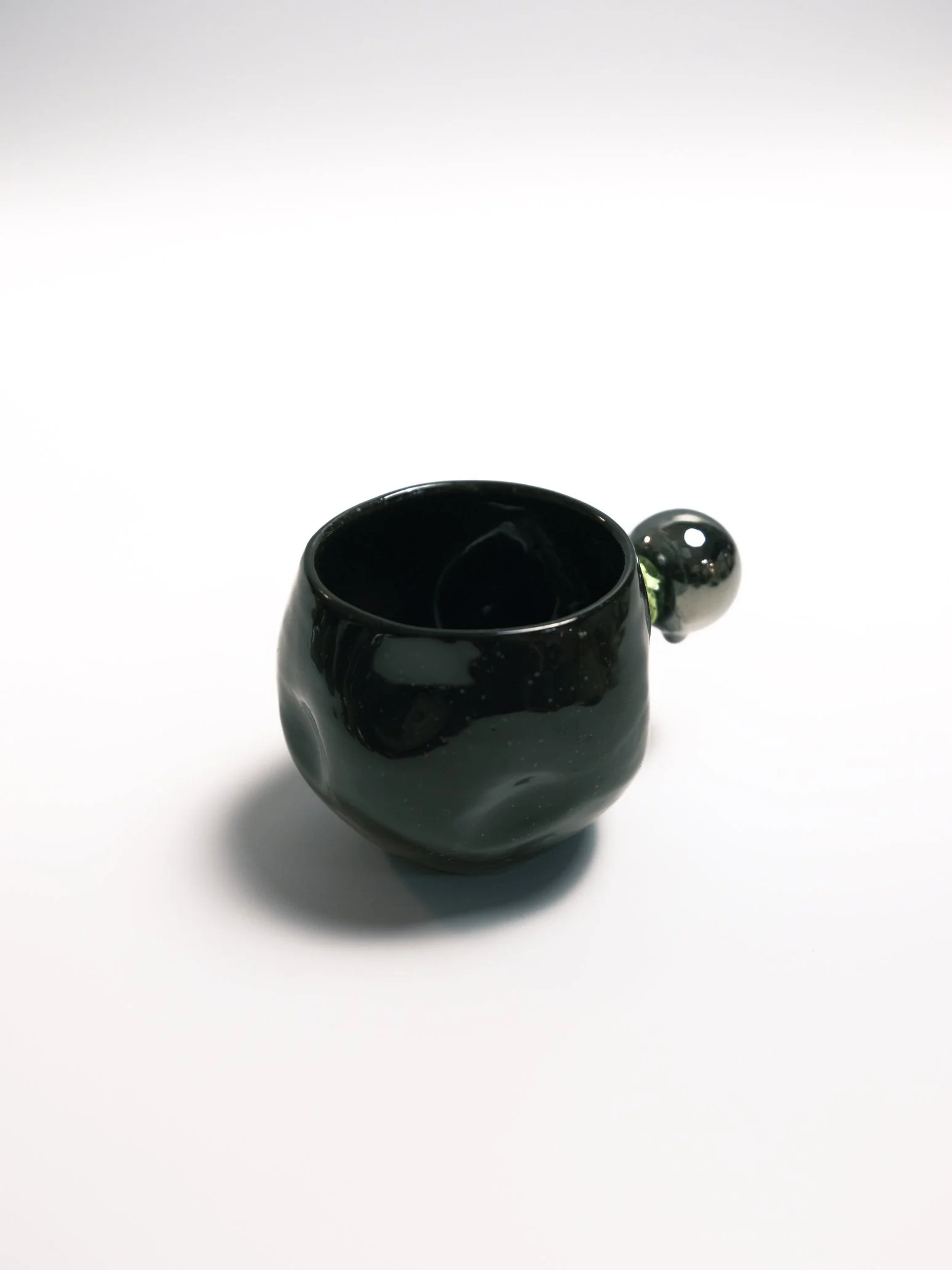
Specimen 06 – Intake Vessel
Artifact Log — Day 042
A vessel-like structure configured for intake, without defined output.
The form suggests containment under sustained pressure.
Reflective glazing interrupts visibility and orientation, while the neon element introduces a non-ceramic intervention — functioning as conduit, tether, or signal.
As an artifact, the object documents a system that absorbs without release.
Its purpose remains undefined.
Dimensions: W 10 cm × D 9 cm × H 8.5 cm
Materials: Stoneware, glossy black glaze, mirror glaze, neon rope
CAD 120
Purchase →
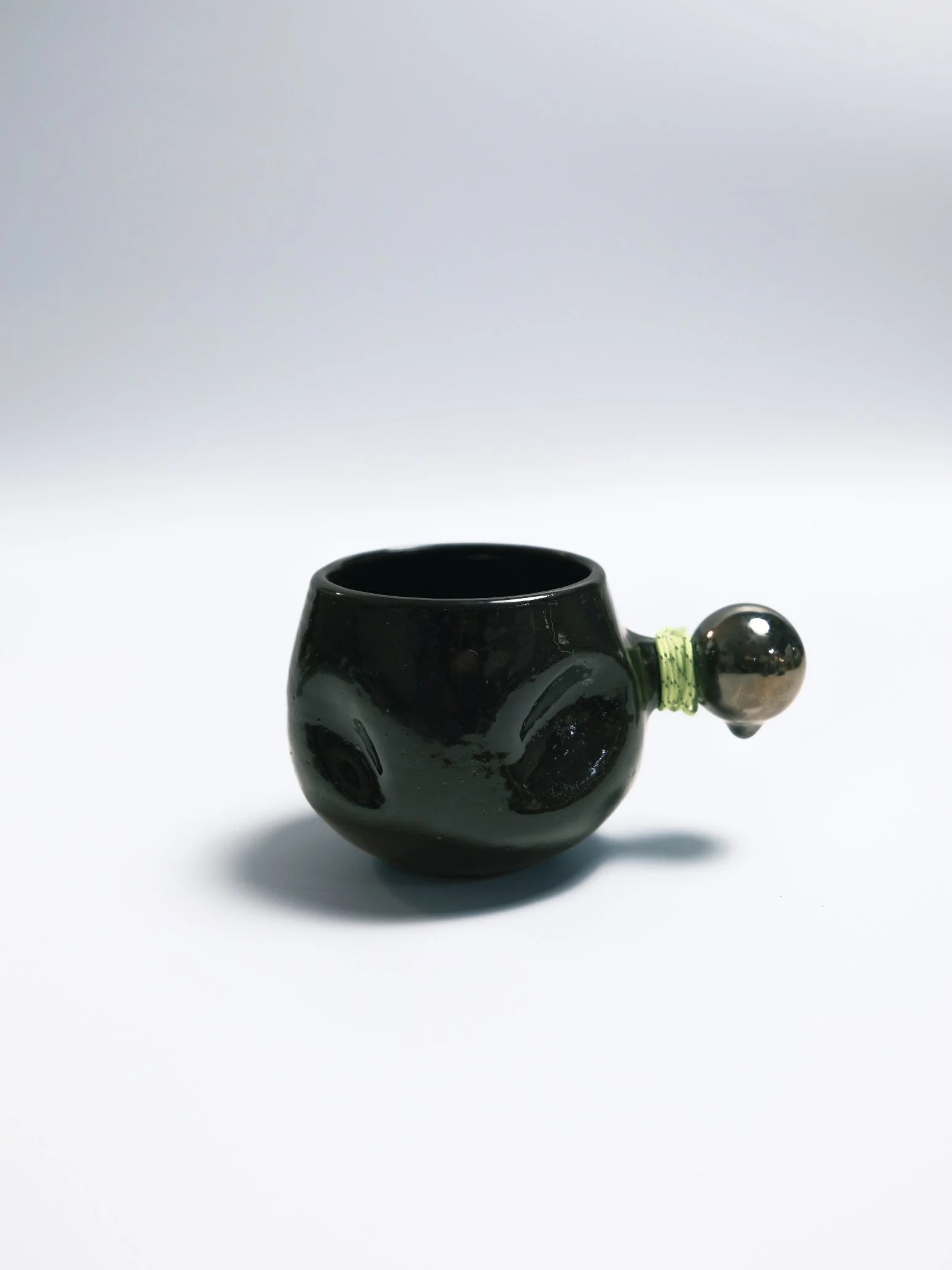
Specimen 07 – Intake Vessel
Artifact Log — Day 043
A vessel-like structure configured for intake, without defined output.
The form suggests containment under sustained pressure.
Reflective glazing interrupts visibility and orientation, while the neon element introduces a non-ceramic intervention — functioning as conduit, tether, or signal.
As an artifact, the object documents a system that absorbs without release.
Its purpose remains undefined.
Dimensions: W 10 cm × D 10 cm × H 8.5 cm
Materials: Stoneware, glossy black glaze, mirror glaze, neon rope
SOLD OUT
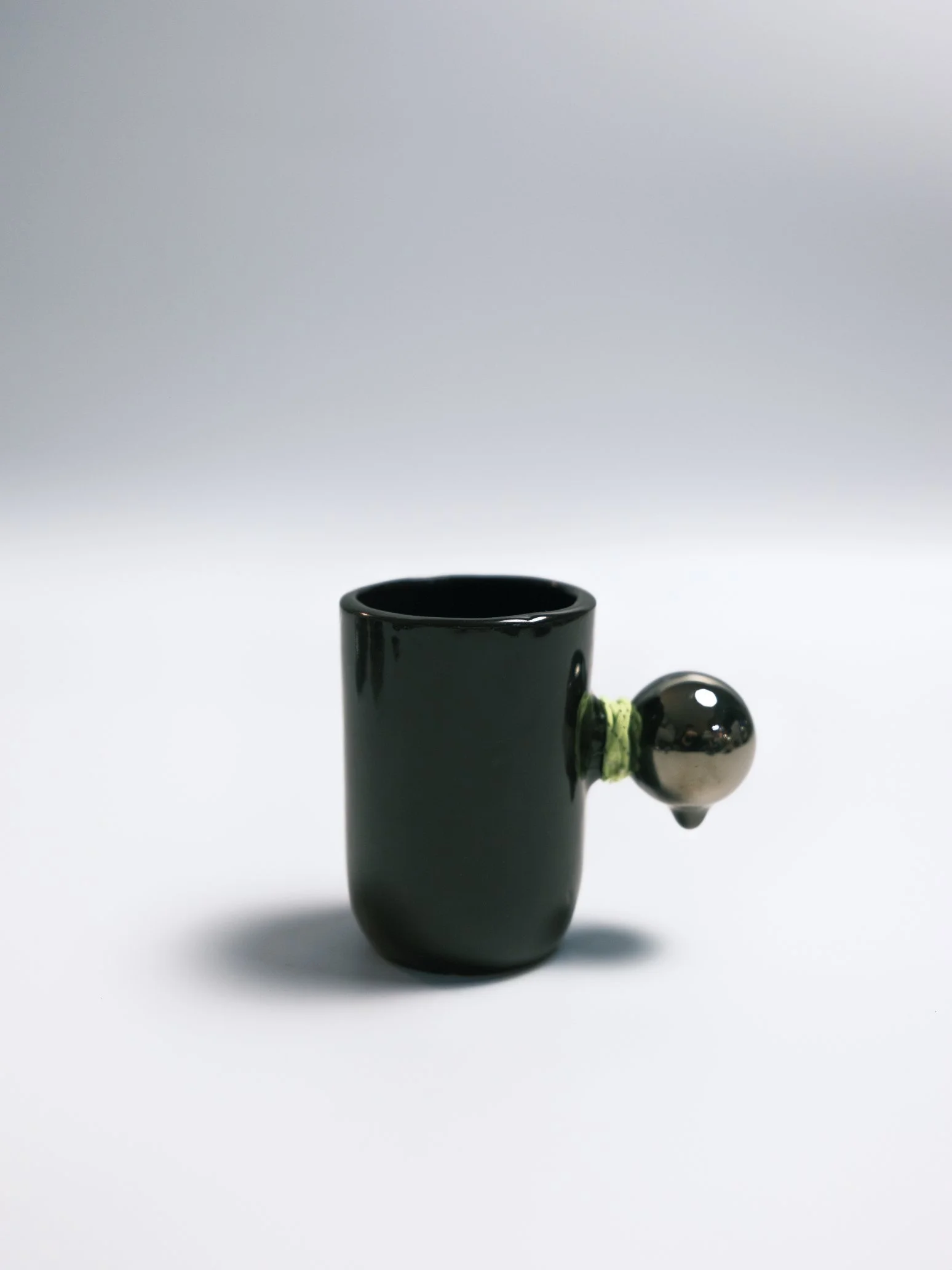
Specimen 08 – Intake Vessel
Artifact Log — Day 044
A vessel-like structure configured for intake, without defined output.
The form suggests containment under sustained pressure.
Reflective glazing interrupts visibility and orientation, while the neon element introduces a non-ceramic intervention — functioning as conduit, tether, or signal.
As an artifact, the object documents a system that absorbs without release.
Its purpose remains undefined.
Dimensions: W 6.5 cm × D 6 cm × H 9 cm
Materials: Stoneware, glossy black glaze, mirror glaze, neon rope
SOLD OUT
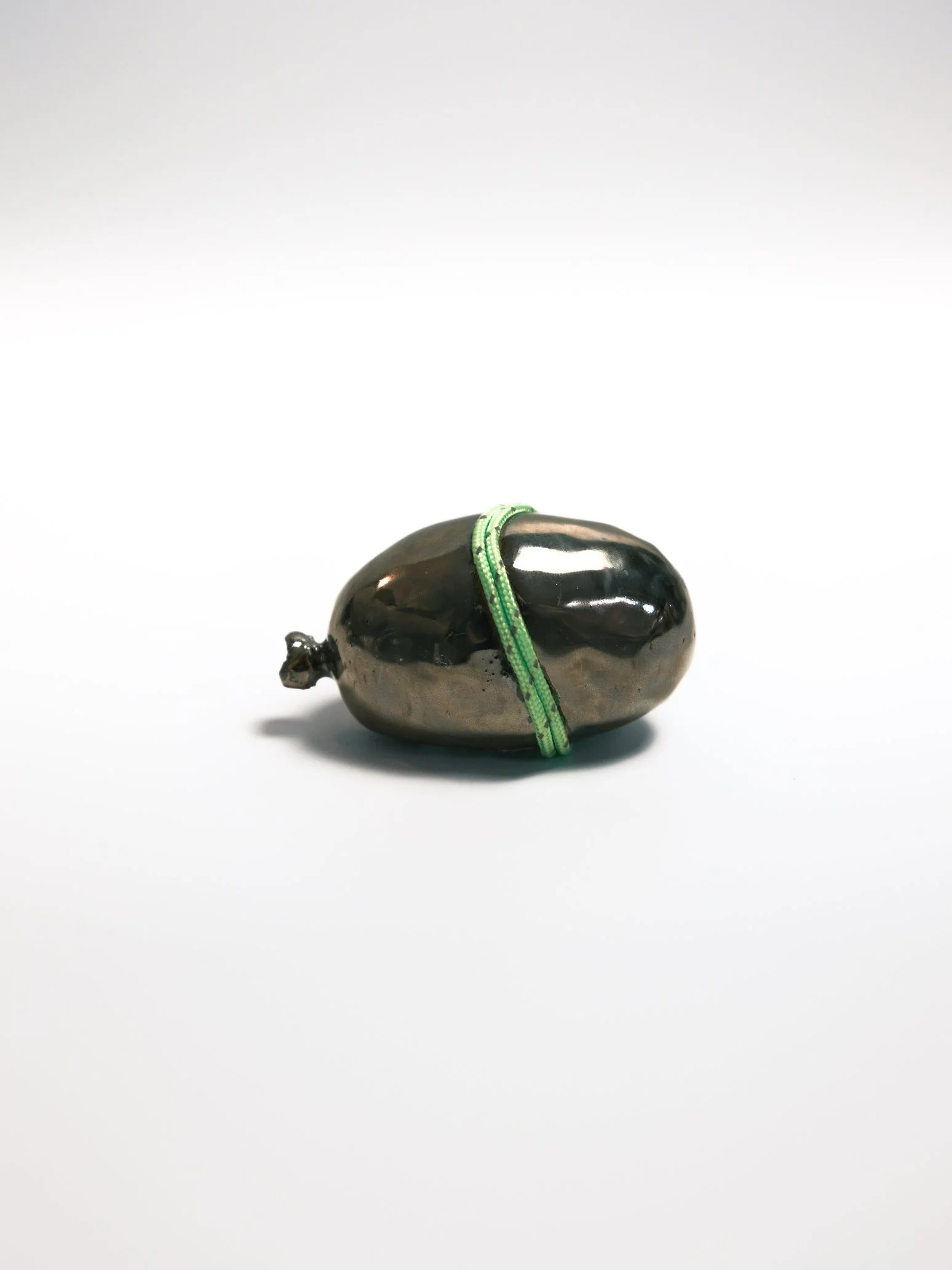
Specimen 09 – Stabilization Pod
Artifact Log — Day 045
A compact form engineered for balance rather than release.
The object appears sealed by external force, its mass held in check through compression.
Mirror glaze distorts surface and depth, denying visual access to what lies beneath.
The neon element functions as a stabilizing band — part restraint, part support — suggesting an imposed equilibrium rather than a natural state.
As an artifact, the object documents a system designed to maintain control under pressure.
Stability is achieved, but at a cost that remains undefined.
Dimensions: W 10 cm × D 6 cm × H 5.5 cm
Materials: Stoneware, mirror glaze, neon rope
SOLD OUT
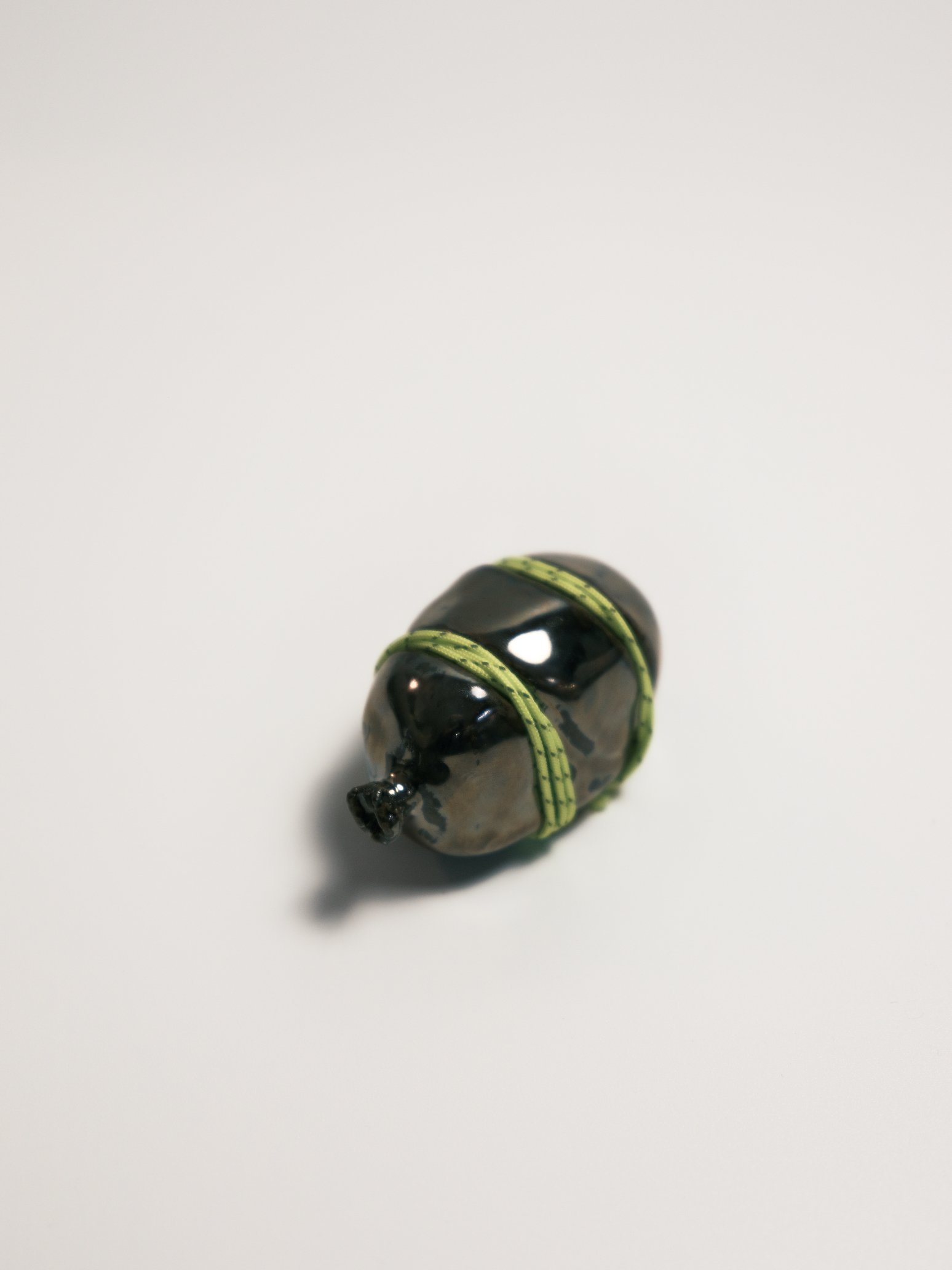
Specimen 10 – Stabilization Pod
Artifact Log — Day 046
A compact form engineered for balance rather than release.
The object appears sealed by external force, its mass held in check through compression.
Mirror glaze distorts surface and depth, denying visual access to what lies beneath.
The neon element functions as a stabilizing band — part restraint, part support — suggesting an imposed equilibrium rather than a natural state.
As an artifact, the object documents a system designed to maintain control under pressure.
Stability is achieved, but at a cost that remains undefined.
Dimensions: W 8 cm × D 4 cm × H 4.5 cm
Materials: Stoneware, mirror glaze, neon rope
SOLD OUT
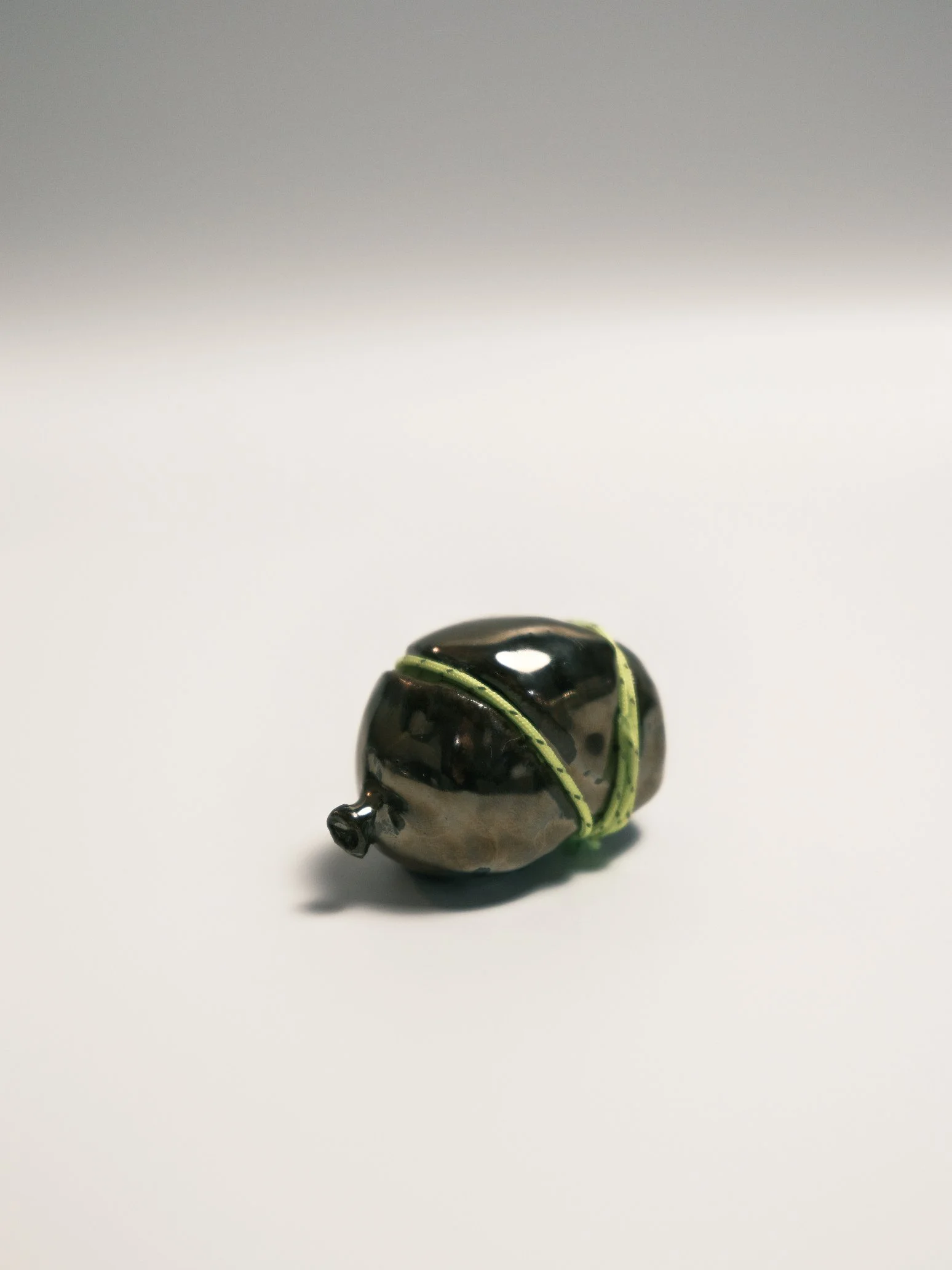
Specimen 11 – Stabilization Pod
Artifact Log — Day 047
A compact form engineered for balance rather than release.
The object appears sealed by external force, its mass held in check through compression.
Mirror glaze distorts surface and depth, denying visual access to what lies beneath.
The neon element functions as a stabilizing band — part restraint, part support — suggesting an imposed equilibrium rather than a natural state.
As an artifact, the object documents a system designed to maintain control under pressure.
Stability is achieved, but at a cost that remains undefined.
Dimensions: W 6.5 cm × D 3.5 cm × H 4 cm
Materials: Stoneware, mirror glaze, neon rope
SOLD OUT
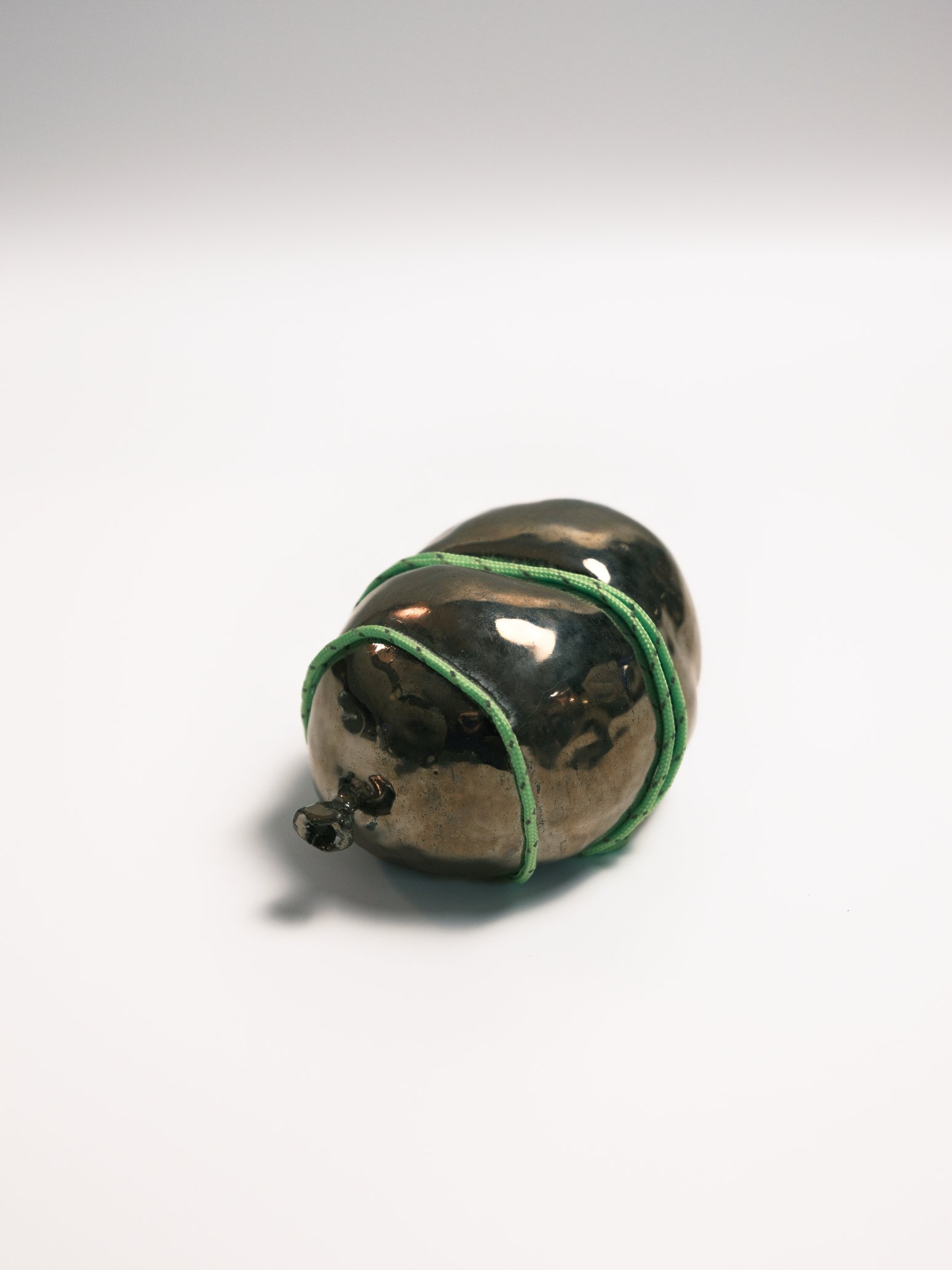
Specimen 12 – Stabilization Pod
Artifact Log — Day 048
A compact form engineered for balance rather than release.
The object appears sealed by external force, its mass held in check through compression.
Mirror glaze distorts surface and depth, denying visual access to what lies beneath.
The neon element functions as a stabilizing band — part restraint, part support — suggesting an imposed equilibrium rather than a natural state.
As an artifact, the object documents a system designed to maintain control under pressure.
Stability is achieved, but at a cost that remains undefined.
Dimensions: W 14 cm × D 10 cm × H 8.5 cm
Materials: Stoneware, mirror glaze, neon rope
SOLD OUT
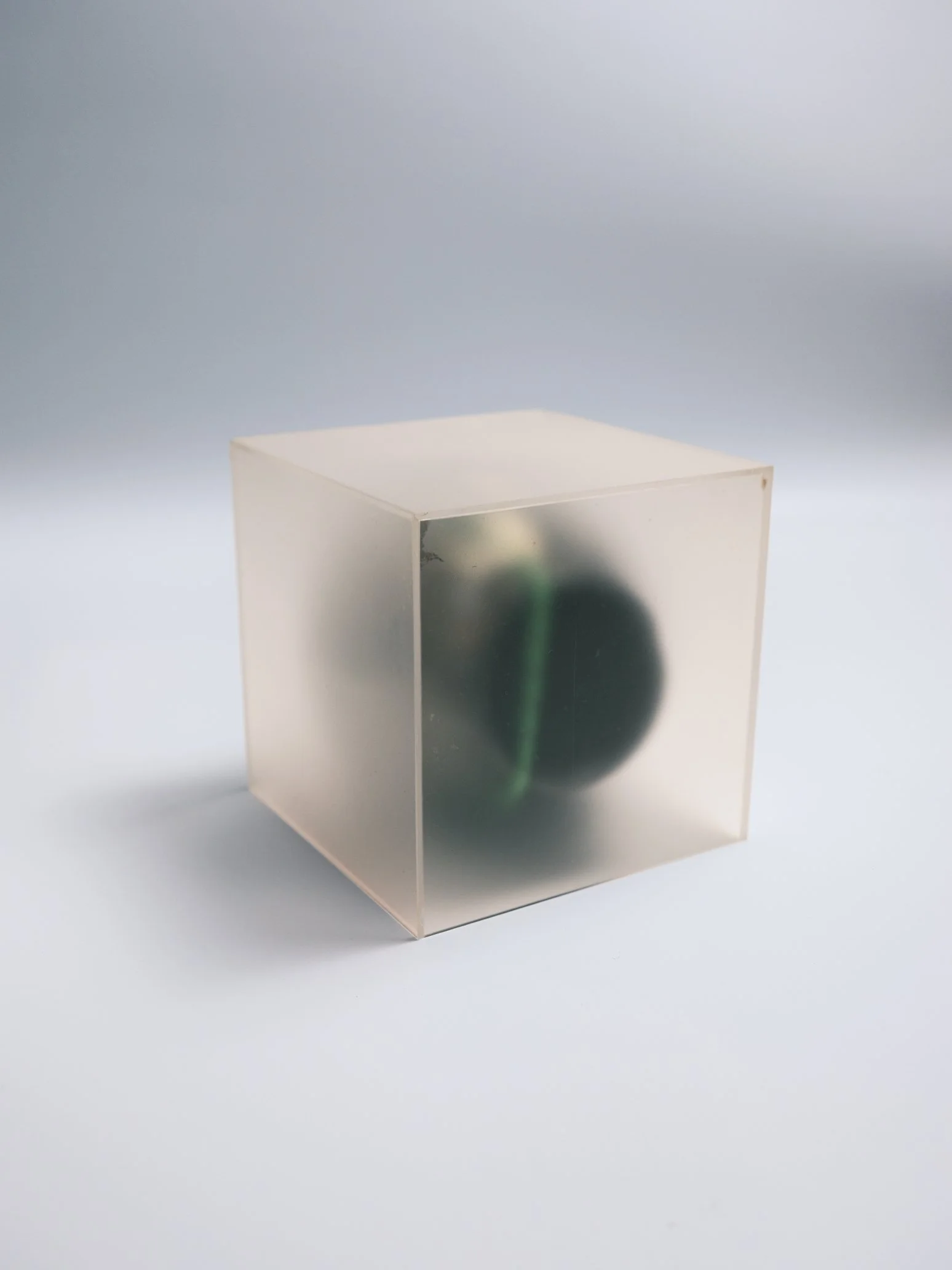
Specimen 13 – Containment Core
Artifact Log — Day 061
A spherical containment unit with an exposed aperture, suggesting access without permission.
The form implies storage, yet offers no indication of what is held—or whether it is meant to remain inside.
Mirror glaze reflects the surrounding environment, collapsing the boundary between object and observer.
The neon rope encircles the body as a stabilizing measure, functioning as both restraint and warning—an external attempt to secure an unstable center.
As an artifact, the object documents a system designed to hold presence rather than resolve it.
Containment is provisional. The core remains active.
Dimensions: W 12 cm × D 14 cm × H 15 cm
Materials: Stoneware, mirror glaze, neon rope
SOLD OUT
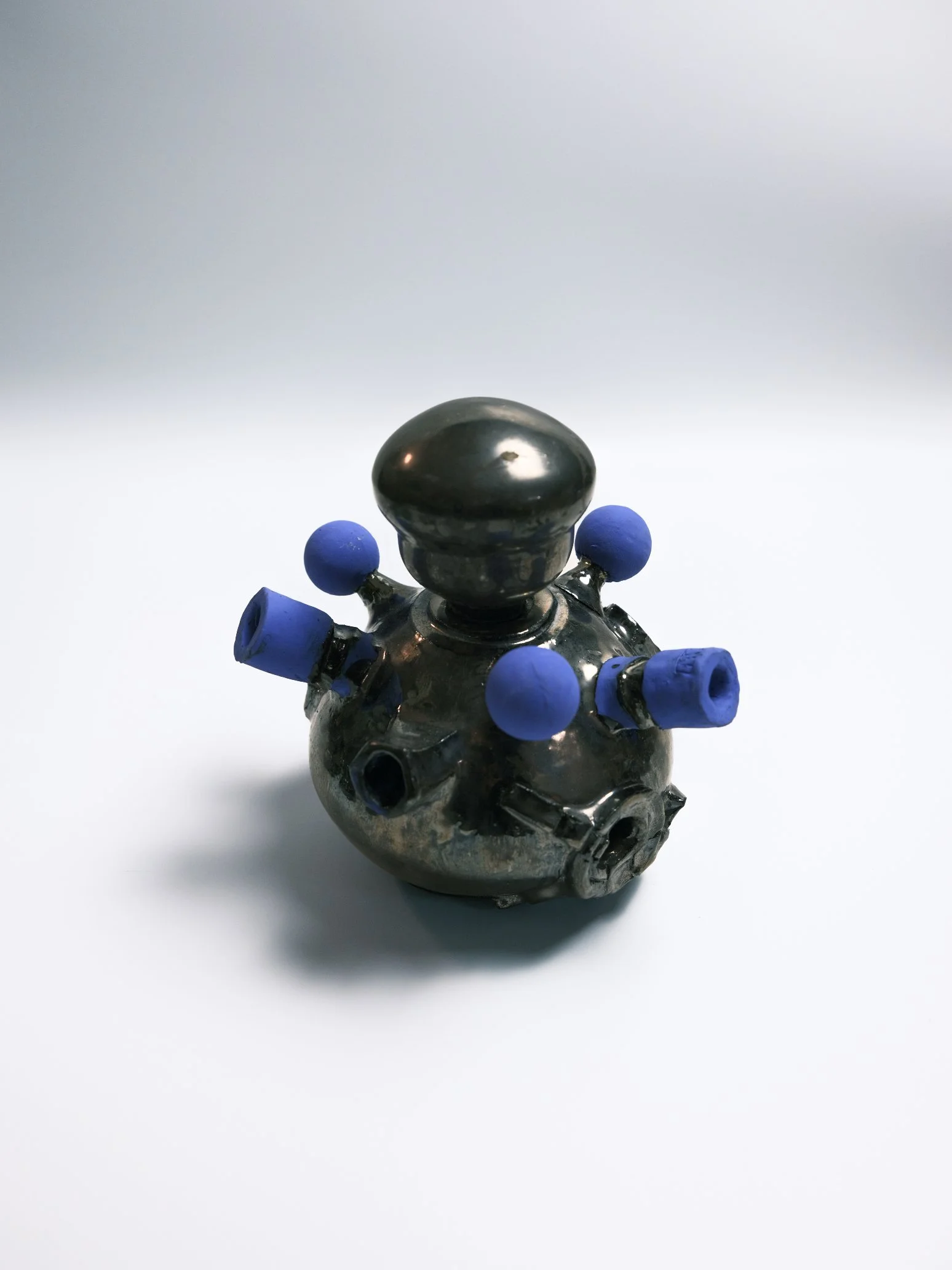
Specimen 14 – Distribution Chamber
Artifact Log — Day 072
A central chamber configured for outward transmission.
Multiple ports extend from the core, suggesting a system designed to circulate, divide, or disperse internal contents rather than contain them.
The spherical body functions as a hub, while the protruding nodes operate as points of transfer—inactive yet expectant.
Mirror glaze reflects external presence, implicating the viewer as part of the distribution cycle.
As an artifact, the object records a structure built for movement without instruction.
What is distributed, to whom, and at what cost remains unresolved.
Dimensions: W 21 cm × D 21 cm × H 21 cm
Materials: Stoneware, mirror glaze
CAD 480
Purchase →
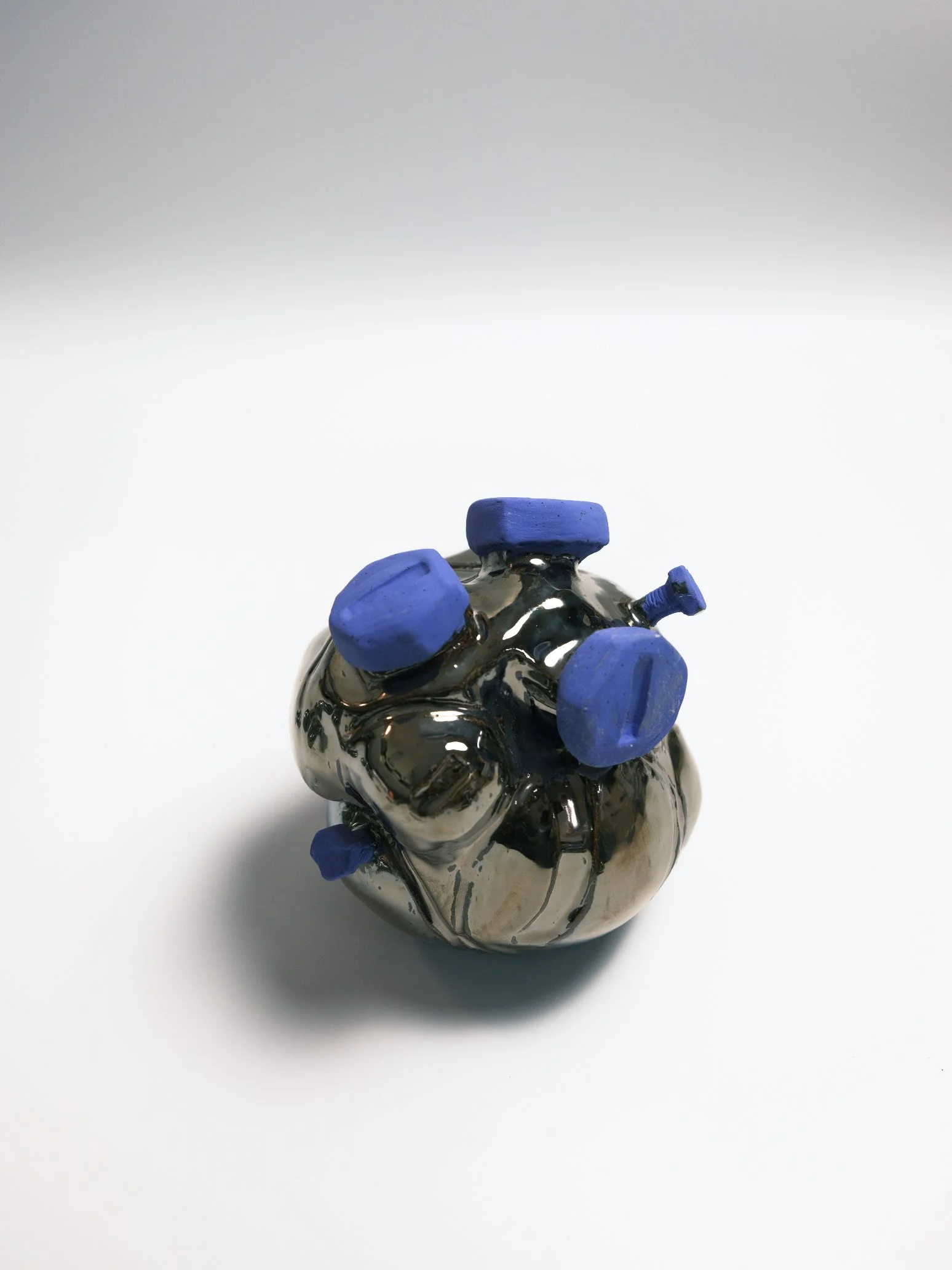
Specimen 15 – Bio-Interface Pod
Artifact Log — Day 062
A multi-nodal form configured for contact rather than containment.
Protruding interfaces suggest points of exchange — attachment, sensing, or translation between internal and external systems.
The reflective surface collapses the boundary between object and viewer, while pigmented nodes interrupt continuity, implying sites of calibration or access.
As an artifact, the pod records an attempt to mediate between bodies and systems.
Whether the interface stabilizes or overwhelms remains unresolved.
Dimensions: W 10 cm × D 9 cm × H 8.5 cm
Materials: Stoneware, mirror glaze
CAD 420
Purchase →
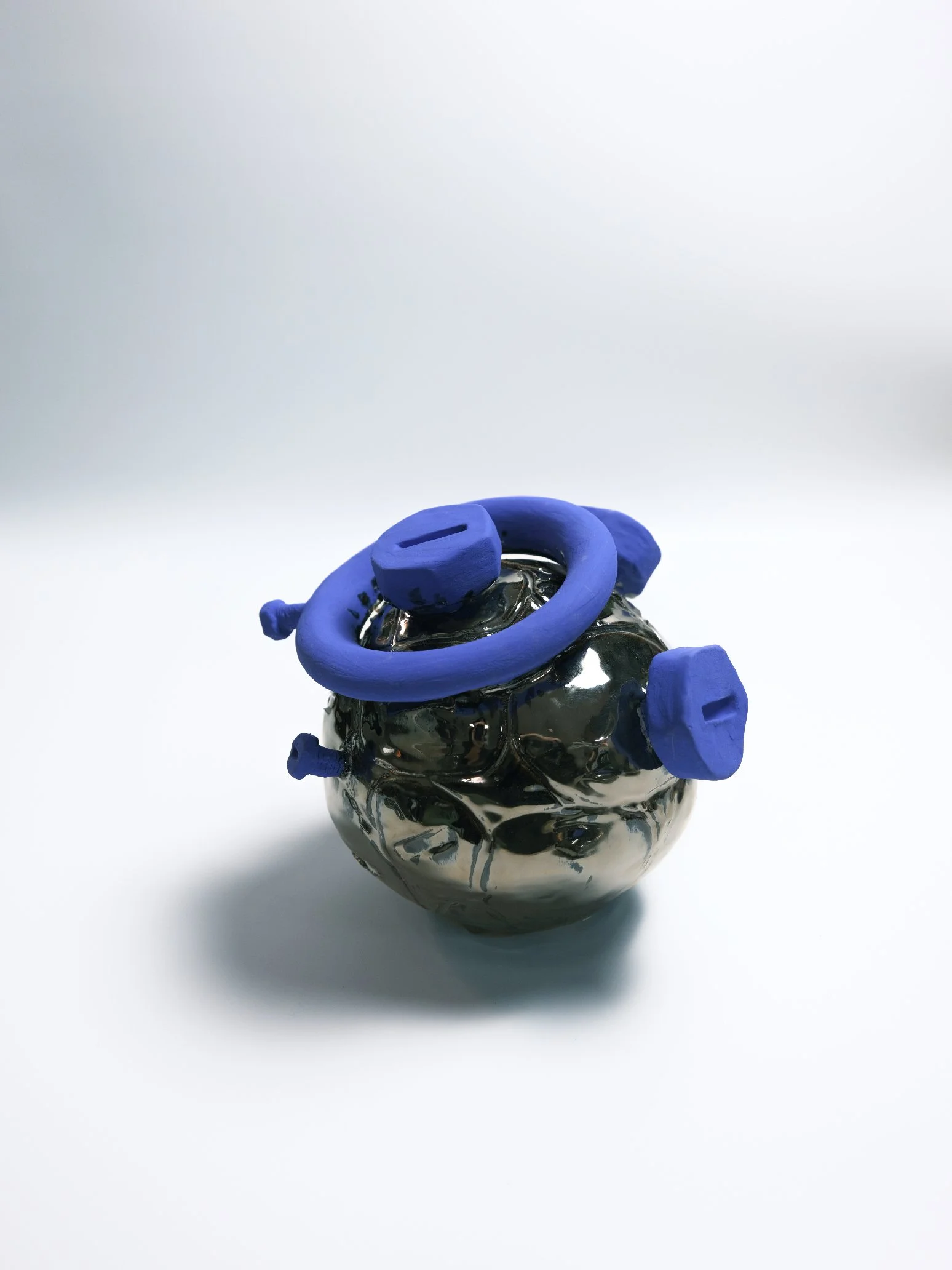
Specimen 16 – Calibration Halo
Artifact Log — Day 071
A central core encircled by an external ring, positioned as a mechanism for alignment rather than containment.
The halo form implies measurement, correction, or ritualized adjustment — orbiting the body it seeks to stabilize.
Pigmented attachments interrupt the reflective surface, suggesting points of manual override or interference within an otherwise closed system.
As an artifact, the object documents a moment of recalibration.
Whether balance is achieved or merely simulated remains indeterminate.
Dimensions: W 24 cm × D 24 cm × H 20 cm
Materials: Stoneware, mirror glaze
CAD 480
Purchase →
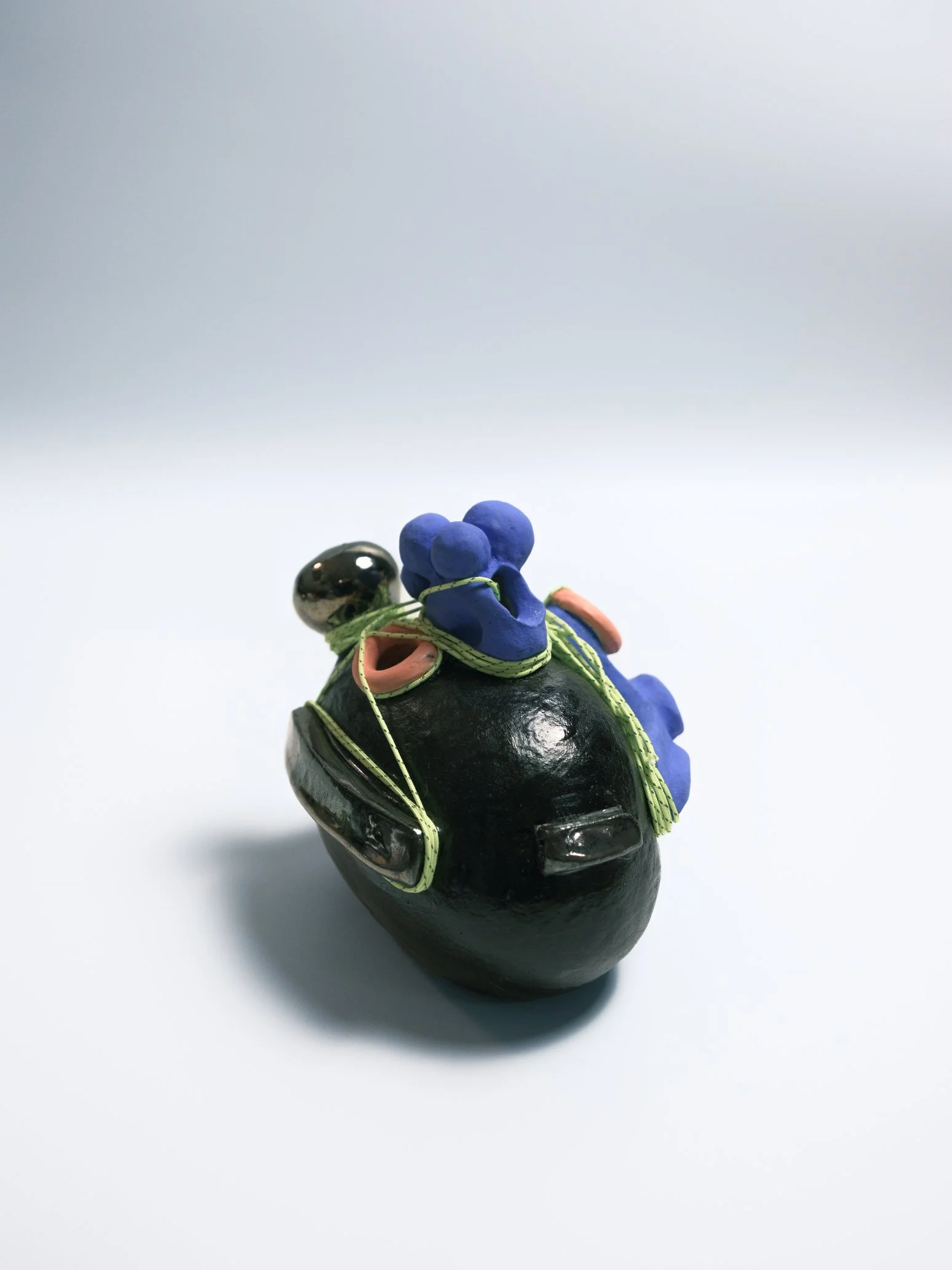
Specimen 17 – Bio-Cluster Vessel
Artifact Log — Day 083
An aggregated form composed of multiple growth points bound into a single body.
The clustered nodes suggest accumulation rather than efficiency — a system that expands through proximity, attachment, and overlap.
Non-ceramic elements operate as ligatures, holding disparate parts in tension while preventing full separation or collapse.
As an artifact, the vessel records a state of co-dependence.
It remains unclear whether the cluster functions as protection, burden, or emergent life.
Dimensions: W 20 cm × D 15 cm × H 16 cm
Materials: Stoneware, neon rope
CAD 300
Purchase →
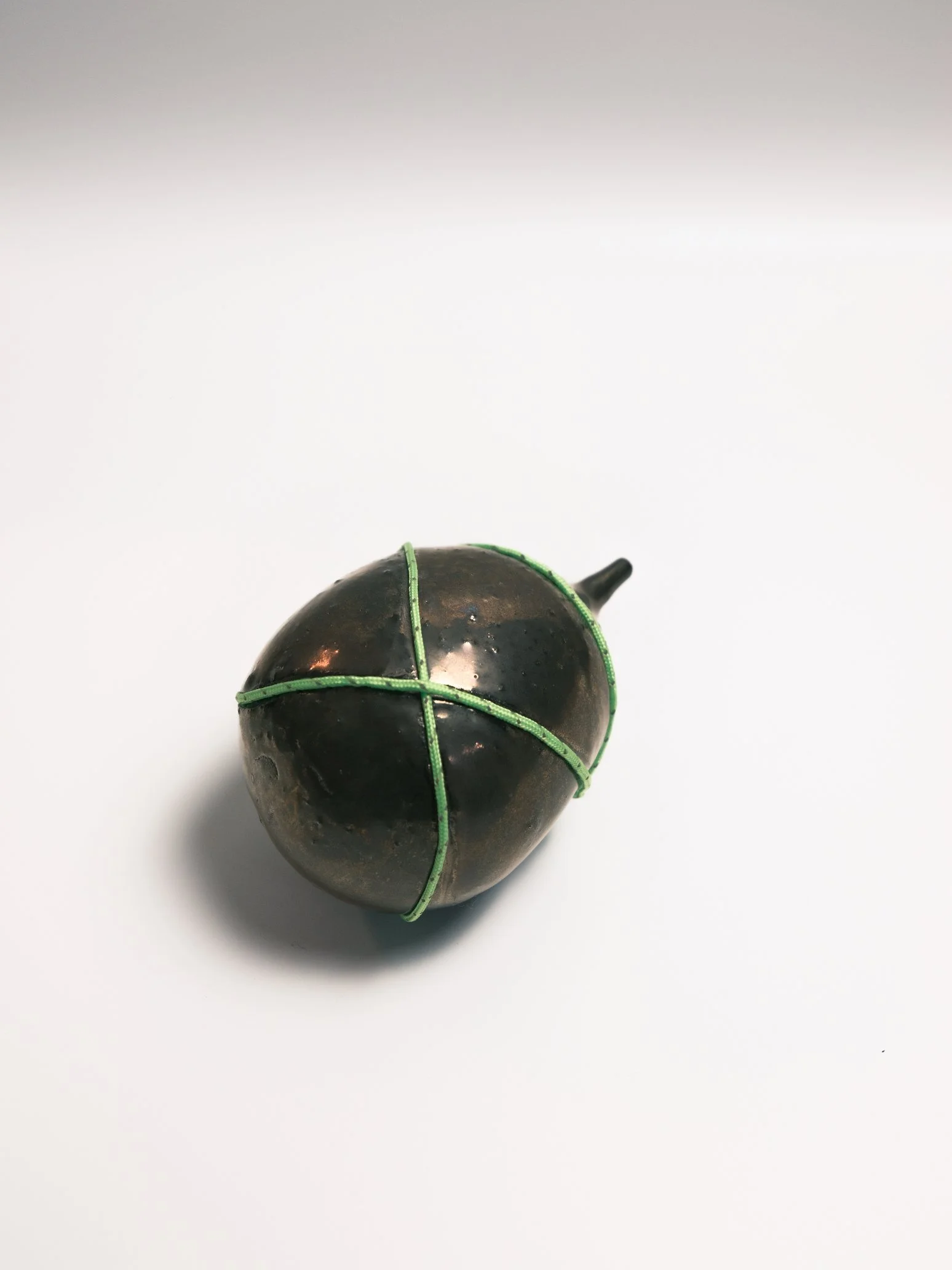
Specimen 18 – Quantum Seed
Artifact Log — Day 091
A compact unit formed around a central core, sealed yet visibly strained.
The tapered protrusion suggests directionality — an orientation toward emergence, transmission, or release.
Binding elements trace the surface like containment lines, implying that the object is held in a suspended state prior to activation.
As an artifact, the seed documents potential rather than outcome.
It exists at the threshold between latency and expansion.
Dimensions: W 18 cm × D 12 cm × H 11 cm
Materials: Stoneware, mirror glaze, neon rope
SOLD OUT
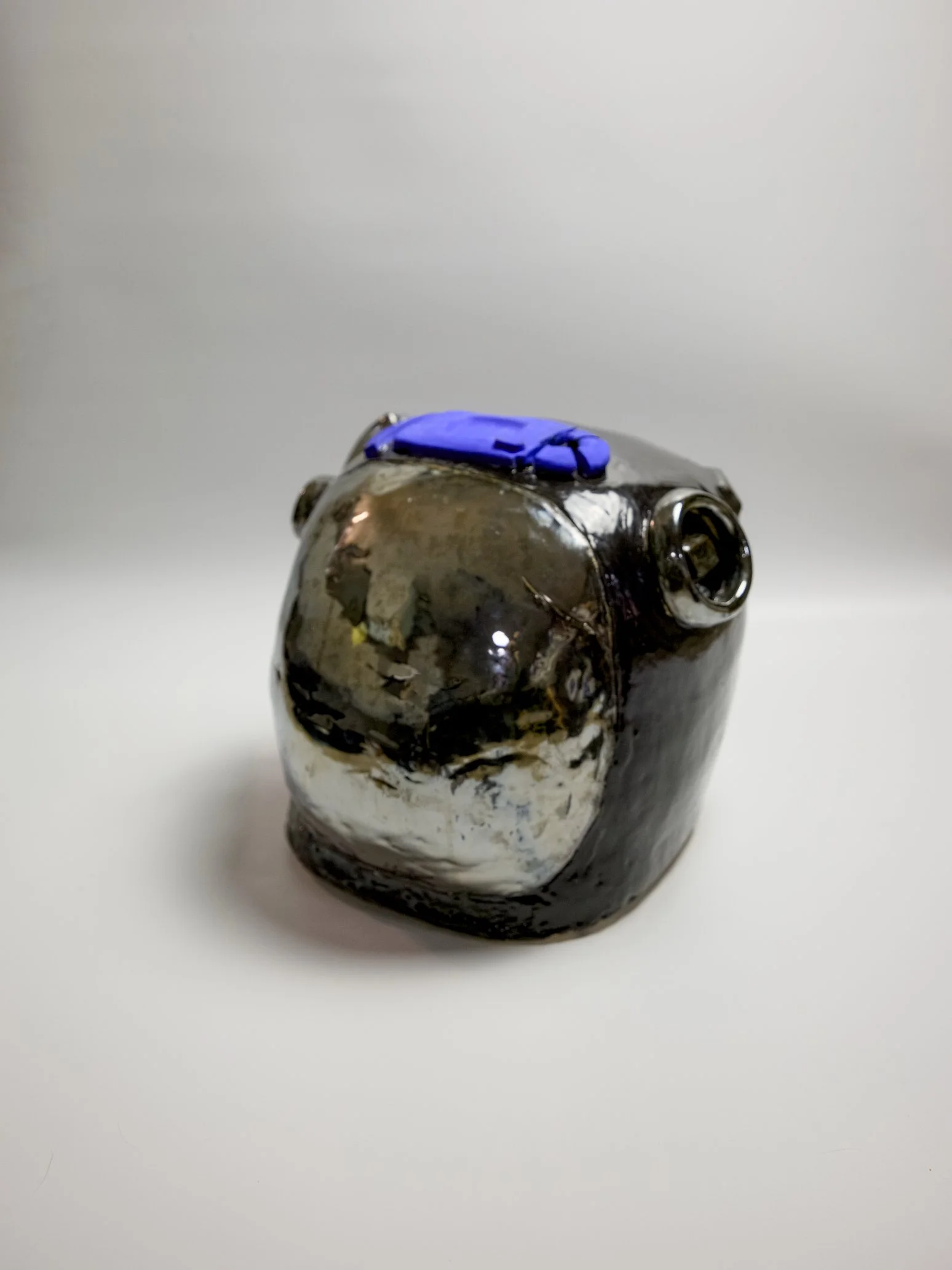
Specimen 19 – Fragment of a Forgotten Memory
Artifact Log — Day 114
A partial structure recovered without context.
Its form suggests erosion rather than construction — as if the object has survived while its system has not.
Surface distortions interrupt reflection, producing broken images that resist reconstruction.
A sealed segment remains intact, functioning as a cap, patch, or attempted preservation.
As an artifact, the fragment records loss rather than function.
What it once contained cannot be verified.
What remains is evidence of prior coherence.
Dimensions: W 31 cm × D 34 cm × H 29 cm
Materials: Stoneware, mirror glaze
SOLD OUT
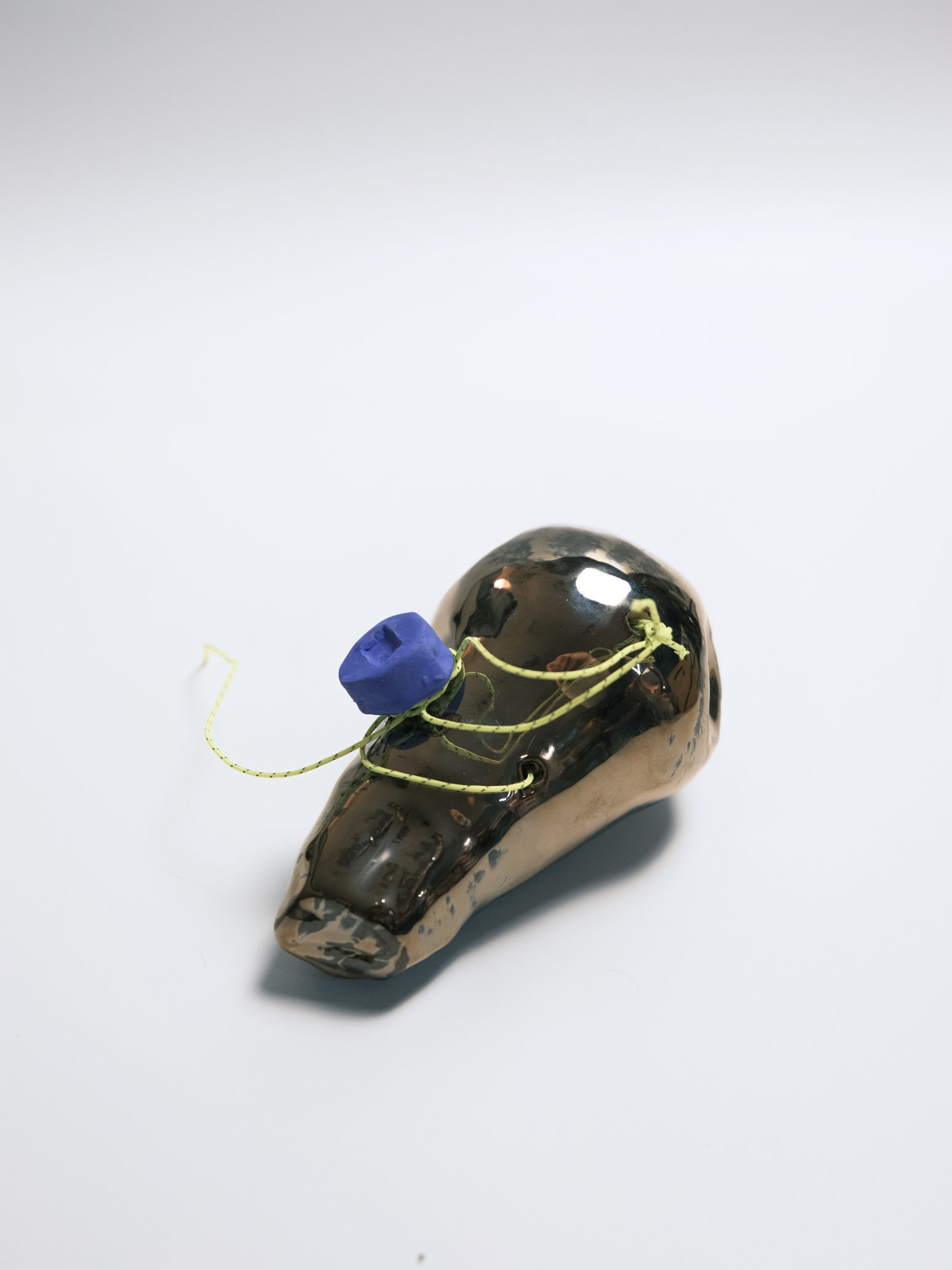
Specimen 20 – Echo Capsule
Artifact Log — Day 120
A compact vessel configured to retain residual signals rather than primary content.
Its asymmetrical form suggests directional intent — as if shaped by transmission rather than storage.
The reflective surface captures fragments of surrounding light, while the attached filament remains unsecured, trailing beyond the body of the object.
This extension functions as an echo path, implying delayed response or incomplete reception.
As an artifact, the capsule records aftermath rather than origin.
What it holds is not preserved memory, but the trace left after release.
Dimensions: W 15 cm × D 11 cm × H 10 cm
Materials: Stoneware, mirror glaze, neon rope
CAD 240
Inquire to Purchase →
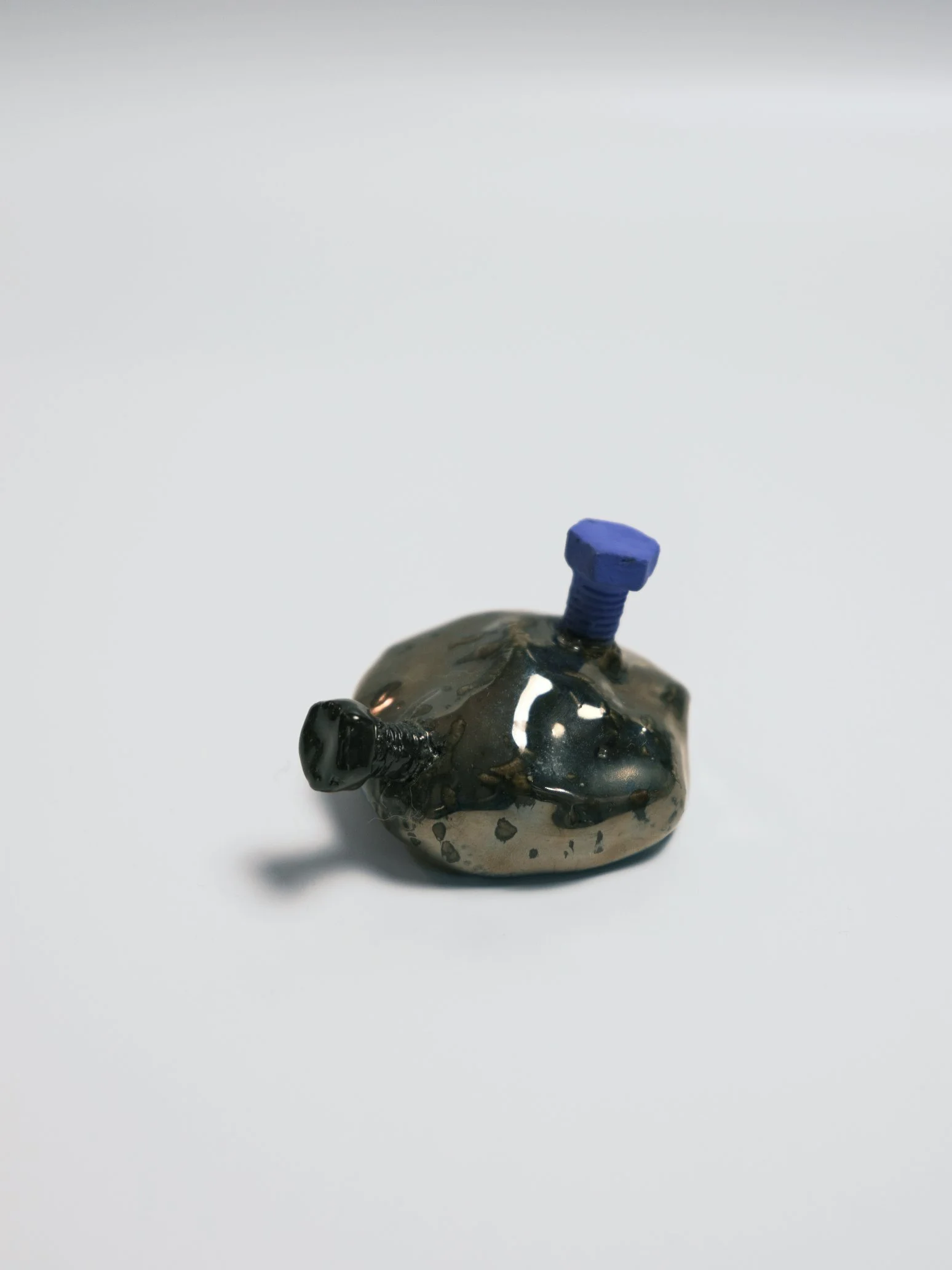
Specimen 21 – Echo Capsule
Artifact Log — Day 127
A compact mechanism positioned between retention and release.
The form suggests a manual interface — a point where memory can be regulated rather than stored.
The raised valve element interrupts the otherwise sealed body, introducing the possibility of controlled discharge.
Its scale implies intimacy: an artifact meant to be adjusted by hand, not observed from distance.
Reflective glazing collapses interior and exterior, erasing clear boundaries between what is held and what is remembered.
As an artifact, the object does not preserve memory.
It governs when forgetting becomes permissible.
Dimensions: W 8 cm × D 6 cm × H 5.3 cm
Materials: Stoneware, mirror glaze
SOLD OUT
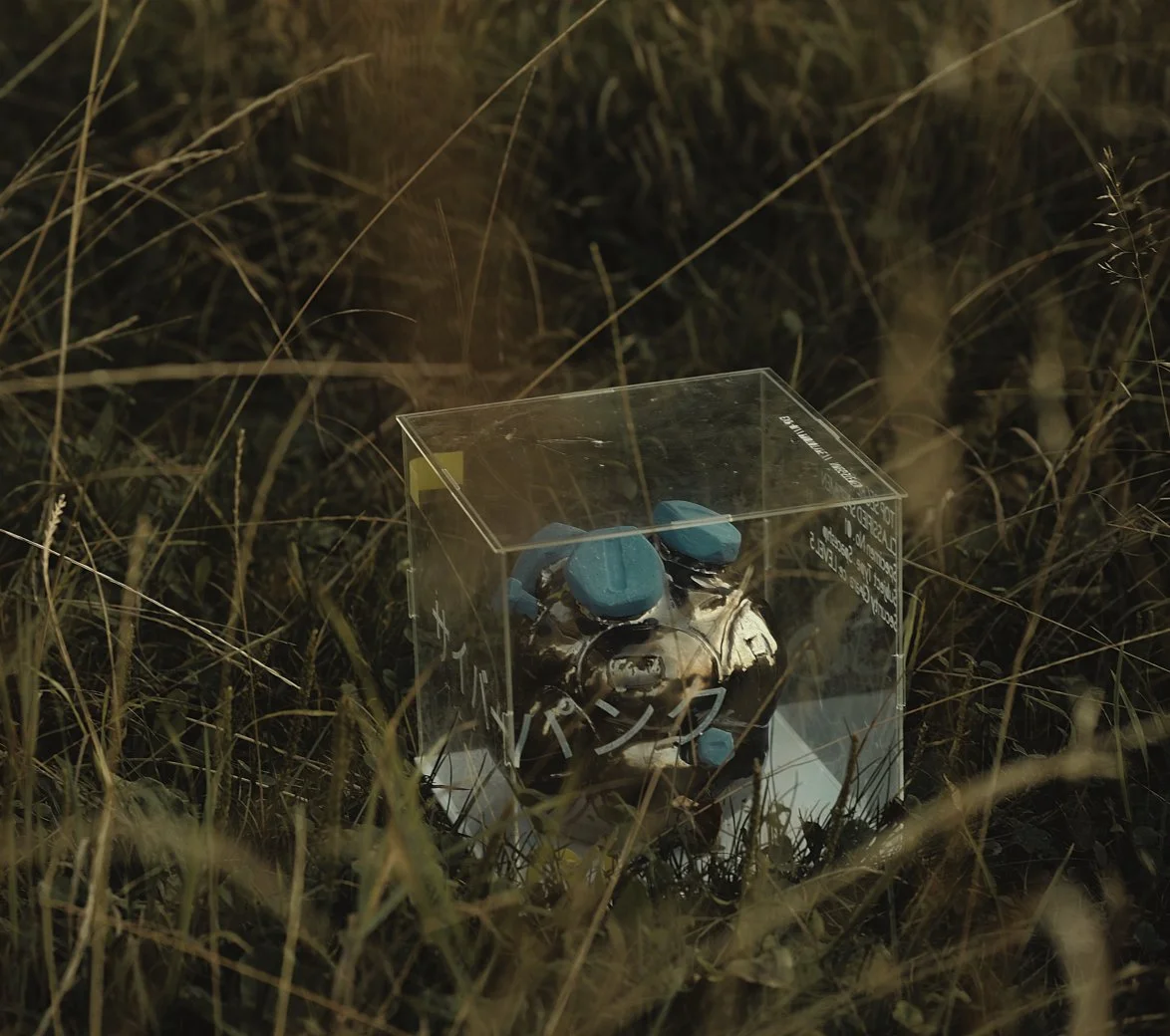
Unearthed Artifacts - Fine Art Print
Field Record — Exterior Site
An artifact recovered in situ.
Encased, displaced, and recontextualized within an unfamiliar terrain.
The acrylic enclosure functions as both preservation device and barrier, separating the object from its environment while exposing it to prolonged observation.
Natural elements press in from all sides, blurring the boundary between excavation and abandonment.
This image does not document a work.
It records a moment where containment fails to fully isolate meaning.
As a print, it extends the artifact system beyond the gallery —
allowing the object to exist simultaneously as relic, image, and memory.
Dimensions: 36 × 36 inches
Materials: Hahnemühle paper, unframed
CAD 200
Inquire to Purchase →